
Tech companies require immediate access to developers. The challenge isn’t just finding talent—it’s finding the right talent within budget and timeline constraints.
Eastern Europe stands as the best solution for 2025. The region’s IT outsourcing market is led by Bulgaria and Poland which provide separate benefits to businesses depending on their requirements.
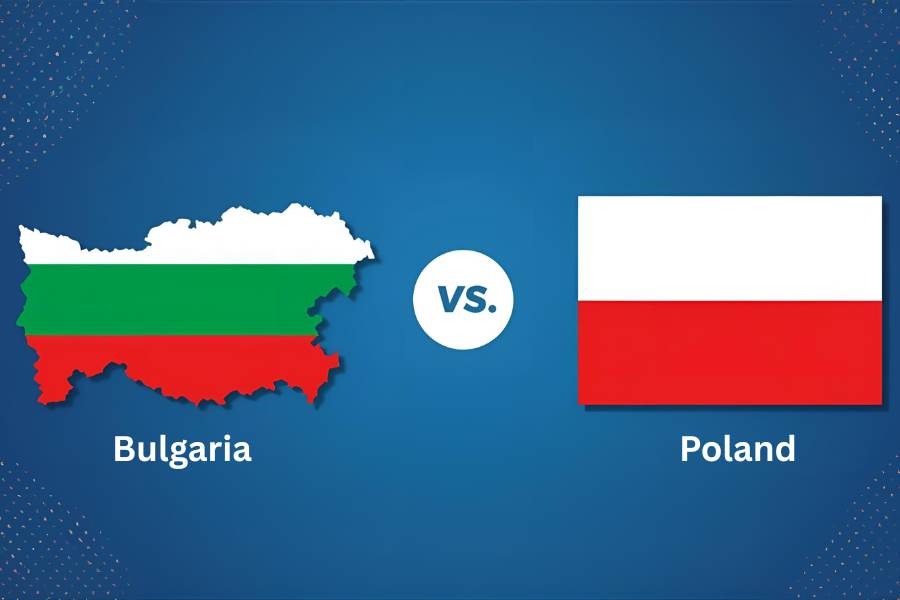
Let’s get started in understanding the key differences for Bulgaria vs Poland for IT outsourcing in 2025 and 2026.
Market Size and Growth Trajectory
Poland’s IT Sector:
The country of Poland maintains 430,000 IT professionals who work in its major cities which include Krakow, Warsaw and Wroclaw. The IT services market generates $3.5 billion each year and experts predict it will expand at a 5.88% annual rate.
Bulgaria’s IT Sector:
The Bulgarian market has 128,000+ IT professionals who work in Sofia and Plovdiv and Varna. The IT services market generates $463 million each year through outsourcing activities which account for $180 million of this total. The annual growth rate exceeds Poland’s rate at 6.08%. Read about the 6 Advantages of hiring in Bulgaria
The ICT sector in Bulgaria achieved a 300% revenue growth during seven years which brought the total revenue to €2.5 billion. Sofia maintains its position as the second fastest-growing technology center in Europe.
Salary Comparison: Bulgaria vs Poland for IT Outsourcing 2025
| Position | Poland Monthly | Poland Annual | Bulgaria Monthly | Bulgaria Annual |
| Senior Developer (3-5 years) | €2,750-4,140 | €45,000-55,000 | €2,800-3,850 | €33,000-46,000 |
| iOS/Android Senior | €4,200-5,400 | – | €3,000-4,200 | – |
80-Person Team Cost Analysis:
- Poland: €3.6-4.4M annually
- Bulgaria: €2.6-3.7M annually
- Annual savings: €1M+
Bulgaria maintains a flat 10% corporate and personal income tax rate—the lowest in the EU. Poland’s tax rates run higher with more complex administrative requirements.
Time-to-Hire: Speed to Market

Bulgaria Timeline:
- Average time-to-hire: 21-34 days
- First candidate shortlist: 3-7 business days
- Complete process: 2-6 weeks
Poland Timeline:
- Average time-to-hire: 36-77 days
- Senior mobile developers: 45-60 days minimum
- Extended timeline due to market competition
For 15 mobile developer positions, Bulgaria completes hiring by mid-February while Poland finishes in April—a difference of 6-8 weeks.
Real Project Example:
Bulgaria Approach (15 Developers):
- Week 1: Initial briefing, market mapping
- Week 2-3: First 5 candidate interviews
- Week 4-5: Offers sent, negotiations
- Week 6-8: Onboarding first batch
- Month 3: All positions filled
Poland Approach (15 Developers):
- Week 1-2: Job posting, initial sourcing
- Week 3-6: Screening, first interviews
- Week 7-10: Multiple interview rounds
- Week 11-14: Offer negotiations
- Month 4-5: Team complete
Related: Our IT recruitment process and see also our headhunting services.
Mobile Developer Specialization

Poland’s 430,000 IT professionals include only 8-10% mobile specialists. The search for senior iOS/Android engineers who have experience with React Native or Flutter development has become increasingly difficult.
The mobile specialization rate among Bulgaria’s 128,000+ developers reaches 12-14%.
The cities of Sofia and Plovdiv host active mobile development communities because Uber and VMware and SAP have set up their operations there.
Flutter demand increased 35% in 2025 as cross-platform development becomes standard. The Flutter platform allows developers to run their application codebase on all platforms including Android, iOS, web and desktop environments. The development of applications with Flutter becomes possible because it allows companies to create applications at a fast pace while maintaining affordable costs.
The Bulgarian market provides better conditions for React Native and Flutter projects because it has a large number of mobile specialists who can support fast development.
Related: 50+ Hiring Statistics Bulgaria: Key Insights and Trends
Education Systems and Technical Training

Poland maintains prestigious technical universities producing thousands of IT and engineering graduates annually. The institutions attract active recruitment efforts from major global technology companies which include Google, IBM and Amazon.
Bulgaria teaches students to code through practical programming skills which they learn in their high school education. The private academies Telerik and SoftUni operate as fast-track training centers which enable developers to enter the workforce through their accelerated programs that last only a few months.
Bulgaria produces 6,000 new IT graduates yearly.
The market shows 15% annual growth which allows the team to expand by 30-50% without running into supply constraints.
Retention and Turnover Patterns
Bulgarian teams maintain annual retention rates above 12-15% which outperforms all other teams.
The Bulgarian market concentration and strong corporate cultures require developers to maintain their current company positions for extended periods.
The Polish developer workforce shows high employee departure rates because staff members tend to switch between multiple employment positions. The competitive market drives companies to perform aggressive recruitment of specialized positions through poaching.
Work Culture and Communication Style
Both nations demonstrate strong English proficiency.
The Polish teams operate through formal communication systems which require them to create complete documentation for their work activities.
- Bulgarian teams choose direct informal communication methods which produce quick results instead of following official protocols.
- Bulgarian organizations adapt quickly to changing requirements.
- The organization achieves two main benefits through its implementation of asynchronous communication. The Balkan flexibility operates through European regulatory systems.
- The Polish teams use complete Jira boards to implement structured Agile methods which include daily standups.
The system generates dependable results which makes it suitable for big organizations that need to run standardized delivery operations.
Infrastructure and Operational Environment
Poland provides international-standard infrastructure through its high-speed train network and modern airports and dependable communication systems.
The organization needs to support hybrid work models because employees need to meet face-to-face at least occasionally.
- Bulgaria operates as the European nation which delivers fiber internet services at the lowest prices.
- Major cities throughout the world have established co-working facilities.
- Flights reach major European cities within two hours.
- Sofia combines standard office infrastructure with European remote work functionality.
The two nations share the Central European time zone which allows them to maintain direct communication with their Scandinavian base of operations.
Global Outsourcing Context
The IT outsourcing market will reach $588.38 billion by 2025 while showing a 6.51% annual growth rate from 2030 to 2030.
- The United States generates the highest revenue at $218.02 billion.
- India maintains 17.58% of global software outsourcing market share.
- The Philippines commands 13.5% while Brazil holds 12.5%.
- The Eastern European market continues to expand its market presence because businesses now choose nearshoring operations instead of offshoring their work.
Organizations in the present day base their partner selection on the value their partners bring to the table instead of choosing partners solely based on price. Organizations dedicate their efforts to obtaining specialized knowledge and developing protected systems and creating strategic partnerships.
Emerging Factors Influencing Outsourcing Strategies
Technology advancement and business model evolution have introduced new priorities for outsourcing partnerships in 2025. Companies now evaluate partners based on security capabilities, automation expertise, and customer interaction tools rather than cost alone.
Security and Data Privacy Requirements
The selection process for outsourcing partners now relies on their data security protection capabilities. Organizations need to confirm that external teams implement security protocols which include data encryption and access control and privacy law compliance.
Organizations choose business partners who have security certifications such as ISO/IEC 27001 and SOC 2. The certifications prove that providers maintain secure systems through regular audits and follow established security protocols. All operations performed outside the organization need to comply with GDPR and HIPAA and local data protection laws which establish rigorous compliance standards.
Organizations base their outsourcing decisions on seven major data privacy trends which emerged during 2025. Organizations establish better data collection methods and improved consent management systems and clear data processing guidelines. All information receives legal protection through the combination of non-disclosure agreements and complete contracts.
Both Bulgaria and Poland maintain GDPR compliance as EU member states. The Bulgarian tech sector maintains a dense structure which allows security systems to deploy quickly throughout its limited number of technology vendors. The Polish market contains established providers who operate under complete compliance systems.
Cloud Computing and BYOD Integration
Cloud adoption has reached 97% among enterprises while 48% of organizations store sensitive data in their cloud environments. Public cloud services spending will exceed $480 billion in 2025 and will reach $1 trillion by 2027.
Organizations select cloud infrastructure management outsourcing because they need access to specialized skills without having to invest their own funds.
- Cloud computing enables businesses to decrease their hardware expenses through operating expense models which provide set pricing structures. Organizations need to purchase resources based on actual usage instead of funding complete infrastructure systems.
- The Bring Your Own Device (BYOD) and Choose Your Own Device (CYOD) trends require organizations to modify their outsourcing operations.
- Remote teams need protected access to corporate data which should be available through their personal devices. EMM solutions through Enterprise Mobility Management (EMM) allow organizations to handle mobile device management and application control and content delivery from single unified platforms.
- The outsourcing partners need to support BYOD security through mobile device management deployment and ongoing supervision and oversight.
- Cloud-based BYOD security solutions enable organizations to select flexible pricing plans which match their requirements for remote worker security needs.
Bulgarian businesses demonstrate fast adaptability through their implementation of cloud-based systems which enable remote work operations. Sofia operates a tech-based ecosystem which lets employees adjust their work hours because of its powerful digital system. The Polish cloud migration market delivers top-notch enterprise solutions through its methodical deployment systems.
Chatbot Development and Customer Interaction Tools
Organizations require AI chatbot development as their essential outsourcing operation to achieve success. Businesses require conversational automation to establish immediate customer connections through their operations which function with minimal staff requirements. The worldwide chatbot market continues to expand because users now want immediate conversations that mimic human interactions.
Organizations achieve various advantages through their decision to outsource their chatbot development work. Organizations obtain specialized knowledge and advanced natural language processing solutions by forming external partnerships instead of creating their own internal teams. The expenses for development work become much lower than what it costs to train and hire full-time employees. Organizations can speed up their market entry through external partnerships because these partners bring ready-to-use solution components and established market entry methods.
The ability of multilingual chatbots to operate becomes essential for businesses that operate worldwide. Outsourcing partners develop solutions through their specialized knowledge which understands how different audience segments connect with each other across cultural differences. Round-the-clock availability becomes sustainable through outsourced monitoring rather than stretching internal resources.
Every chatbot conversation produces vital customer data. Organizations use this data to build individualized experiences while they improve their strategic approaches which results in business expansion. Organizations need to evaluate their data analytics capabilities because they serve as essential criteria for outsourcing partnership evaluation.
The Bulgarian IT market shows 15% annual growth because of its established AI and automation technology sector. The Bulgarian government created an AI research facility in Sofia to draw international funding into the country. The Polish developer market offers a large talent pool which brings advanced skills in data analytics and enterprise AI deployment.
Customized Automation Solutions
Organizations select outsourcing partners who create specific automation solutions instead of using standard automated systems. AI-based automation systems bring changes to coding operations and quality inspection methods and data processing systems.
All organizations now need DevOps as an essential practice which used to be a distinct skill. Outsourcing partners must implement automatic continuous integration/continuous deployment (CI/CD) pipeline integration according to companies. The basic requirement for modern infrastructure operations includes automation through Kubernetes and Docker tools.
Process standardization through automation improves operational efficiency. Organizations require customized solutions which match their operational systems and fulfill all required regulatory standards. The most effective outsourcing partnerships unite established procedures with the ability to modify them according to specific business requirements.
Quality control systems need to expand their scope to monitor all external operations which the organization performs through outsourcing. Organizations use their monitoring systems to establish specific work standards and quality benchmarks which help them evaluate employee performance. Business excellence demands ongoing assessment of outsourced projects to measure their achievement against company targets.
Strategic Partnerships Over Transactional Relationships
Organizations need to develop superior quality partnerships to reach their 2025 outsourcing strategy goals.
Businesses want to work with partners who show understanding of business operations and maintain direct communication and take responsibility for their actions instead of just following instructions.
The process of regular communication helps to connect internal teams with their external service providers.
- Organizations achieve stakeholder alignment through regular meetings and updates and their implementation of efficient reporting systems.
- Organizations with open cultures that support immediate feedback and quick problem-solving can successfully manage distance-related obstacles.
- Both Bulgaria and Poland offer different partnership approaches.
- Bulgarian providers offer direct CEO access together with fast decision-making and flexible project requirement modifications.
- The Polish vendors establish enterprise partnerships through their systematic method which implements full documentation systems alongside formal Agile methodologies.
The market now focuses on value-based outsourcing instead of its previous emphasis on reducing costs. Organizations today need to manage their expenses while obtaining specialized skills and security features and strategic direction.
Key Outsourcing Decision Drivers

The three main elements which determine 70% of outsourcing choices include cost optimization and specialist skill availability and operational flexibility.
1. Cost Optimization:
The cost of living in Eastern Europe is 30-60% lower than what you would find in the United States or Western European countries. The hourly rates in Poland range between $40 and $55 while Bulgaria offers services at $30 to $50 per hour. An 80-person mobile team saves €1M annually in Bulgaria versus Poland.
2. Specialist Availability:
Poland’s 500,000+ IT professionals offer deep Java and AWS backend expertise. Bulgaria’s 125,000+ developers specialize in Flutter, React Native, and mobile applications. The mobile specialization rate of Bulgaria at 12-14% makes it suitable for mobile development projects while Poland’s 8-10% rate is less suitable.
3. Operational Flexibility:
Bulgaria provides businesses with the ability to expand their operations by 30-50% while keeping their headquarters costs at a minimum. Companies employ 15 people within 28 days. The extensive Polish market allows businesses to start major initiatives yet these projects encounter prolonged administrative processing times.
2025 Technology Trends
AI tools have introduced major changes to developer work practices when handling code. Organizations now send their AI/ML development work and cloud infrastructure management and cybersecurity protection to outside companies for execution. DevOps has become standard rather than specialized.
Cross-platform development booms with Flutter demand up 35%. Organizations need their applications to run on both Android and iOS platforms through a single codebase development process. Hot reload in Flutter enables developers to speed up their work process which results in shorter development times for product launches.
Bulgaria adapts quickly to new technologies. The curricula at SoftUni and other universities and academies undergo regular updates. The Bulgarian government established an AI research facility in Sofia to attract more international funding support.
Decision Framework: Which Country to Choose
Choose Poland for:
- Enterprise-scale projects requiring 100+ engineers
- Deep Java, AWS, and backend infrastructure expertise
- Structured delivery systems through established outsourcing providers
- Projects where formal Agile processes are mandatory
- Long-term engagements with predictable methodologies
Choose Bulgaria for:
- Mobile-focused teams requiring Flutter and React Native specialists
- Fast hiring timelines under 30 days
- Startups and mid-size firms needing operational flexibility
- Projects requiring 25-30% better ROI
- Companies prioritizing direct communication and quick adaptation
Making Your Selection
Companies no longer pursue the cheapest developers. The company needs business partners who show expertise in business operations and direct communication abilities and full responsibility for their decisions.
Bulgaria stands out for agility. The tech community maintains strong bonds between its various members. CEOs use LinkedIn to build professional relationships which leads to instant meeting arrangements and new project starts throughout the following week. The organization can execute tasks at a faster pace because it has fewer bureaucratic procedures.
Poland provides outsourcing solutions that are suitable for large businesses. Organizations implement established frameworks to support their use of big teams and structured delivery methods.
The system works best for organizations that need to employ more than 100 engineers while maintaining direct supervision and wanting to work with established vendors.
The Smart 2025 strategies unite Polish business strengths with Bulgarian fast-paced operations and mobile technology skills.
Read: Popular IT Outsourcing Countries in 2024-2025
Frequently Asked Questions
Why does Bulgaria work better for mobile development teams?
The developer pool in Bulgaria includes 12-14% mobile specialists but Poland has 8-10% mobile specialists. Senior developers become available in 21-28 days instead of 45-60 days. Teams achieve 12-15% higher annual retention rates. The two cities of Sofia and Plovdiv attract mobile talent because Uber and VMware and SAP have set up operations there which gives companies instant access to skilled developers.
What specific salary reductions do Bulgarian employees experience when compared to their Polish counterparts?
Senior mobile developers cost €3,000-4,200 monthly in Bulgaria versus €4,200-5,400 in Poland. Teams of 15 mobile developers save €180K-300K annually. The Bulgarian 10% flat tax rate produces a 25% higher investment return than Poland's complex tax system. An 80-person team saves over €1M annually.
Does Bulgaria face talent shortage risks for rapid scaling?
The Bulgarian IT market experiences 15% annual growth while it welcomes 6000 new graduates who start their job search every year. Sofia and Plovdiv support 30-50% business expansion. Stock options and flexible remote work arrangements help companies keep their employees instead of dealing with the high employee theft rates that Poland experiences. Bulgaria hosts more than 10,000 ICT companies which export their products through 70% of their total operations.
How does political stability compare between Bulgaria and Poland?
Poland maintains superior political stability when compared to other nations. Bulgaria holds numerous elections while its government changes ministers at regular intervals. However, Bulgaria's tech sector operates independently from political changes. The EU maintains its 10% corporate tax rate as the lowest in the EU while political changes do not affect this business-friendly environment.
What specific infrastructure benefits does each nation provide to its users?
The country of Poland offers superior infrastructure through its high-speed train network and multiple international airports and dependable communication systems. The office space supports hybrid work arrangements because employees need to meet face-to-face at least occasionally. Bulgaria offers some of Europe's cheapest and fastest fiber internet. Major cities throughout the world have established co-working facilities. Sofia provides two-hour flight access to major European cities with full European remote work infrastructure.
About the Author: Petia Topalova